Natives For Your Neighborhood is a labor of love and commitment. If you use this website, help us maintain and grow it with your tax-deductible donation.
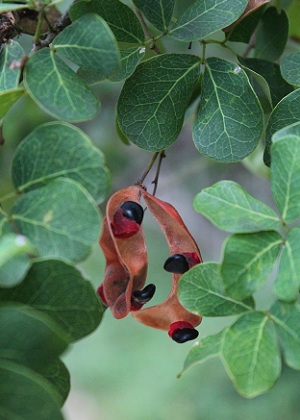
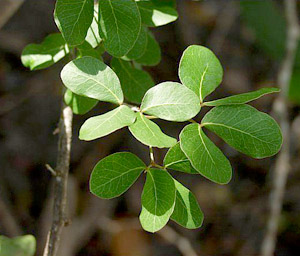
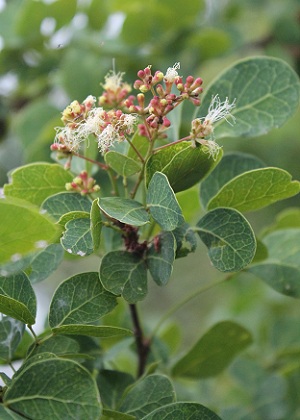
Copyright by: George D. Gann in habitat, Everglades National Park, Key Largo, Florida, 2013
General Landscape Uses:
Accent or specimen shrub or small tree along the coast. Buffer plantings.
Availability:
Available at native plant nurseries in South Florida.
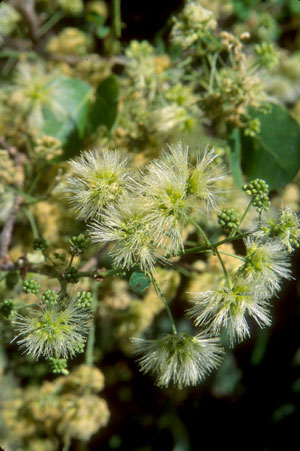
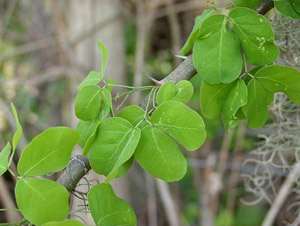
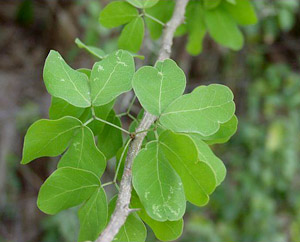
Description: Large shrub or small tree with an irregular crown from spreading, spiny branches. Trunks short, to about 8 inches in diameter. Bark reddish-brown, divided by fissures. Leaves compound, the leaflets about 1-2 inches long.
Dimensions: Typically 10-15 feet in height; to 24 feet in South Florida. Often as broad as tall or broader.
Growth Rate: Moderate.
Range:
Monroe County Keys and Miami-Dade County north along west coast to Hillsborough County; West Indies, Central America and South America. In Miami-Dade County not known from the mainland; known only from the Florida Keys in and around Elliott Key in Biscayne National Park. For a digitized image of Elbert Little's Florida range map, visit the Exploring Florida website.
Wildlife and Ecology: Provides food and cover for wildlife. Larval host plant for cassius blue (Leptotes cassius), large orange sulphur (Phoebis agarithe), and presumably Miami blue (Cyclargus thomasi bethunebakeri) butterflies. Nectar plant for cassius blue, giant swallowtail (Papilio cresphontes), and presumably Miami blue butterflies.
Horticultural Notes: Can be grown from seed removed from the aril. Place seed on top of soil and just cover. Place container in light shade.
References: Miami-Dade County Landscape Manual (2005).
Comments: Almost the entire plant is spiny.
Copyright by: George D. Gann in habitat, Everglades National Park, Key Largo, Florida, 2013
Copyright by: George D. Gann in habitat, Everglades National Park, Key Largo, Florida, 2013










 Map of select IRC data from peninsular Florida.
 Map of suggested ZIP codes from South Florida north to Jacksonville, Gainesville, and Cedar Key.