General Landscape Uses:
Groundcover in dry, open areas, mostly along the coast. Wildflower and rock gardens.
Ecological Restoration Notes: A relatively common element of coastal uplands along both coasts. Probably not present in pine rocklands in southern Miami-Dade County, where the critically imperiled E. cokeri occurs, except on Long Pine Key in Everglades National Park.
Availability:
Widely available in South Florida. Commonly available at native plant nurseries in central Florida. Available in Boynton Beach at
Sustainscape (561-245-5305), and in Lake Worth at
Indian Trails Native Nursery.
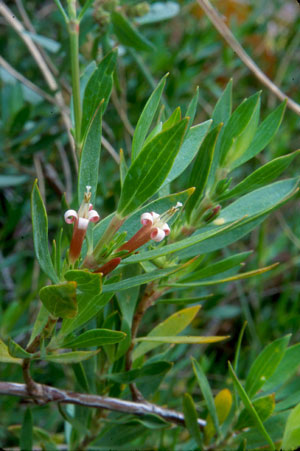
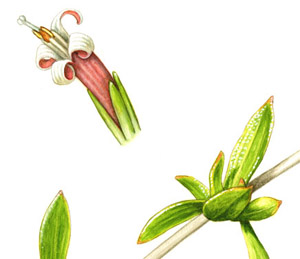
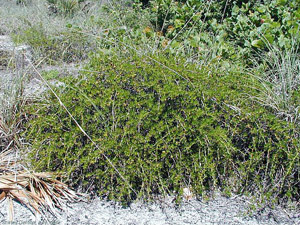
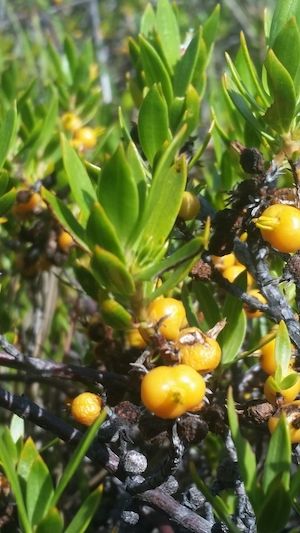
Description: Small sprawling shrub, woody at the base. Leaves clustered toward the ends of the stems, bright glossy yellowish-green, about 1-1 1/2 inches long.
Dimensions: About 1-3 feet in height. Rooting from stems touching the ground and becoming much broader than tall.
Growth Rate: Moderate.
Range:
Monroe County Keys north along the coasts to Volusia, Hillsborough and Pinellas counties; West Indies, Mexico and Central America. Rare on the east coast north of Martin County.
 Map of select IRC data from peninsular Florida.
 Map of suggested ZIP codes from South Florida north to Jacksonville, Gainesville, and Cedar Key.
Map of ZIP codes with habitat recommendations from the Monroe County Keys north to Martin and Charlotte counties.
Habitats:
Map of suggested ZIP codes from South Florida north to Jacksonville, Gainesville, and Cedar Key.
Map of ZIP codes with habitat recommendations from the Monroe County Keys north to Martin and Charlotte counties.
Habitats: Coastal thickets throughout South Florida and pine rocklands on Long Pine Key in Everglades National Park and in the Florida Keys.
Soils: Moist to seasonally wet, well-drained sandy or limestone soils, without humus.
Nutritional Requirements: Low; it grows in nutrient poor soils.
Salt Water Tolerance: Low; does not tolerate long-term flooding by salt or brackish water.
Salt Wind Tolerance: Secondary line; tolerates significant salt wind without injury, but usually is somewhat protected.
Drought Tolerance: High; does not require any supplemental water once established.
Light Requirements: Full sun.
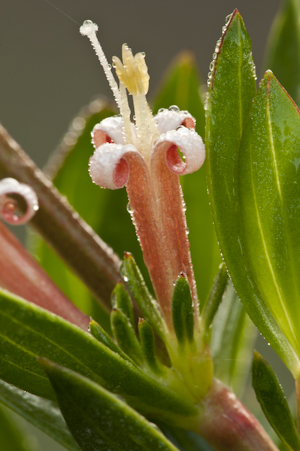
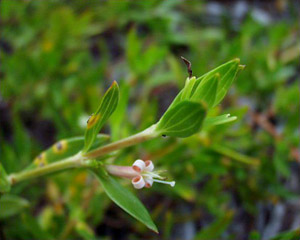
Flower Color: Pinkish-white or white.
Flower Characteristics: Semi-showy, about 1/2" long.
Flowering Season: All year.
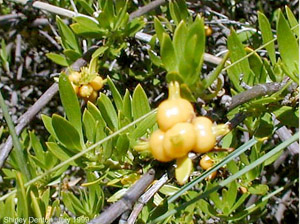
Fruit: Round golden-yellow berry containing a single seed, in dense clusters. All year; peak winter-spring.
Wildlife and Ecology: Provides food for birds.
Horticultural Notes: Primarily grown from cuttings under mist.
References: Hammer 2004, Nelson 2003
Comments: An excellent groundcover in open, dry sites along the coast. See also the Florida Wildflower Foundation's
Flower Friday page.