| Wild dilly
|
| Manilkara jaimiqui subsp. emarginata
|
| Sapotaceae
|
Landscape Uses:
|
|
Specimen tree or shrub in the Florida Keys. Buffer plantings. |
Ecological Restoration Notes: |
|
A fairly common element of the upland side of the ecotone between tidal swamps and rockland hammocks in the Florida Keys. Rare elsewhere. |
| Availability: |
|
Available at native plant nurseries in South Florida. Available in Key West at Key West Botanical Garden |
| Description: |
| |
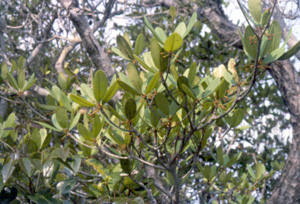
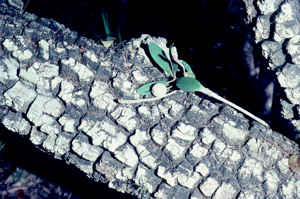
Small to medium tree or large shrub with a dense rounded crown. Trunks usually short, gnarled to 18 inches in diameter, but usually much less in South Florida. Bark gray to reddish-brown, deeply fissured and breaking into small plates. Leaves think, leathery, clustered toward the ends of the twigs. |
| Height: |
| |
Typically 10-15 feet in height; to 21 feet in South Florida. Usually as broad as tall or broader. |
| Growth Rate: |
| |
Slow. |
| Range: |
| |
Monroe County Keys, Miami-Dade and Collier counties; Bahamas. In Miami-Dade County, native to islands in and around Elliott Key in Biscayne National Park and the extreme southern mainland along the shores of Florida Bay in Everglades National Park; collected once in Collier County by J.R. Lorenz in what is now the Cape Romano - Ten Thousand Islands Aquatic Preserve. For a digitized image of Elbert Little's Florida range map, visit the Exploring Florida website. |
| Habitats: |
| |
Coastal hammocks and pine rocklands. |
| Soils: |
| |
Moist to rarely inundated, well-drained to moderately well-drained limestone soils, with humusy top layer. |
| Nutritional Requirements: |
| |
Moderate; can grow in nutrient poor soils, but needs some organic content to thrive. |
| Salt Water Tolerance: |
| |
Moderate; tolerates brackish water or occasional inundation by salt water. |
| Salt Wind Tolerance: |
| |
Low; salt wind may burn the leaves. |
| Drought Tolerance: |
| |
Moderate; generally requires moist soils, but tolerant of short periods of drought once established. |
| Light Requirements: |
| |
Full sun. |
| Flower Color: |
| |
Yellowish. |
| Flower Characteristics: |
| |
Inconspicuous. |
| Flowering Season: |
| |
All year; peak spring-summer. |
| Fruit: |
| |
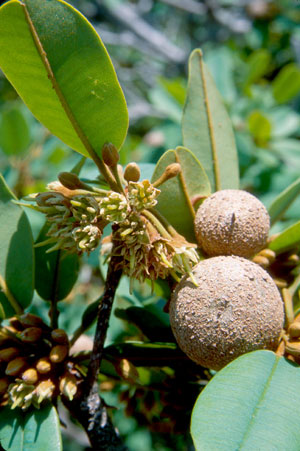
Light brown berry. Edible. |
| Wildlife and Ecology: |
| |
Provides food and cover for wildlife. |
| Horticultural Notes: |
| |
Can be grown from seed. |
| Comments: |
| |
Related to the commercially grown sapodilla (Manilkara zapota). It is listed as threatened by the state of Florida. |
|
|
|
|