| Cinnamon bark, Pepper cinnamon
|
| Canella winterana
|
| Canellaceae
|
Landscape Uses:
|
|
Accent or specimen shrub or small tree in coastal areas. |
Ecological Restoration Notes: |
|
A relatively common sub-canopy tree in coastal hammocks in the Florida Keys and the shores of Florida Bay. |
| Availability: |
|
Commonly available at native plant nurseries in central and South Florida. |
| Description: |
| |
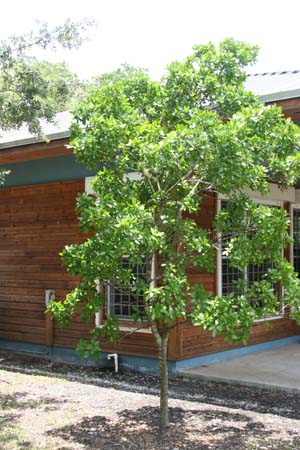
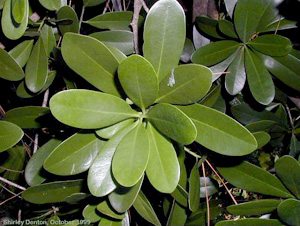
Small tree or large shrub with a broadly rounded crown. Trunks to 10 inches in diameter, but usually much smaller. Bark light gray, broken into short, thick scales. Leaves dark green above, shiny, 2-5 inches long, aromatic when crushed. |
| Height: |
| |
Typically 15-20 feet in height; to 29 feet in South Florida. Usually taller than broad. |
| Growth Rate: |
| |
Slow. |
| Range: |
| |
Monroe, Miami-Dade and Collier counties; West Indies, Mexico and the Bay Islands of Honduras. Very rare on the mainland along the extreme southern coast to about Everglades City. For a digitized image of Elbert Little's Florida range map, visit the Exploring Florida website. |
| Habitats: |
| |
Coastal hammocks. |
| Soils: |
| |
Moist, well-drained limestone or calcareous sandy soils, with humusy top layer. |
| Nutritional Requirements: |
| |
Moderate; can grow in nutrient poor soils, but needs some organic content to thrive. |
| Salt Water Tolerance: |
| |
Moderate; tolerates brackish water or occasional inundation by salt water. |
| Salt Wind Tolerance: |
| |
Moderate; grows near salt water, but is protected from direct salt spray by other vegetation. |
| Drought Tolerance: |
| |
Moderate; generally requires moist soils, but tolerant of short periods of drought once established. |
| Light Requirements: |
| |
Full sun to light shade. |
| Flower Color: |
| |
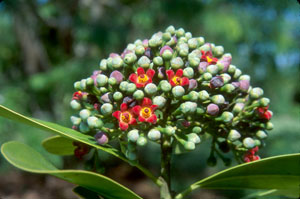
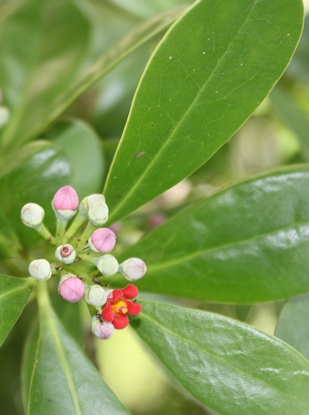
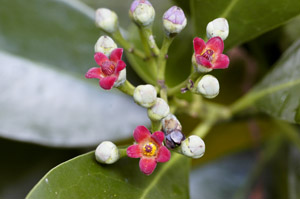
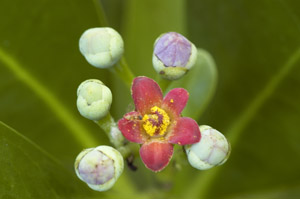
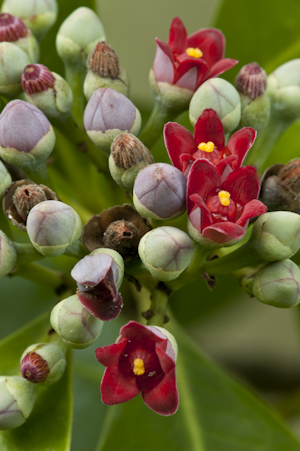
Red petals with yellow anthers. |
| Flower Characteristics: |
| |
Semi-showy clusters with green and purple buds and red flowers. |
| Flowering Season: |
| |
All year; peak spring-summer. |
| Fruit: |
| |
Red berry. |
| Wildlife and Ecology: |
| |
Provides food and cover for wildlife. Nectar plant for Schaus' swallowtail (Heraclides aristodemius) and other butterflies. |
| Horticultural Notes: |
| |
Can be grown from seed. |
| Comments: |
| |
The crushed leaves have a spicy fragrance. In the 1700s, the inner bark was exported from the West Indies to Europe as a substitute for cinnamon. The outer bark is toxic. It is listed as endangered by the state of Florida. See also the Florida Wildflower Foundation's Flower Friday page. |
|
|
|
George D. Gann
in habitat, Dominican Republic, 2011
|
|
|
|