Landscape Uses:
|
|
Primarily recommended for natural landscapes and habitat restorations. It can also be used as an accent shrub in moist to wet sunny areas. It is also useful in buffer plantings. |
Ecological Restoration Notes: |
|
A common and widespread species in forest edges and in thickets. It can be aggressive when planted, spreading readily from seed, so caution is advisable. |
| Availability: |
|
Rarely grown by native plant nurseries. |
| Description: |
| |
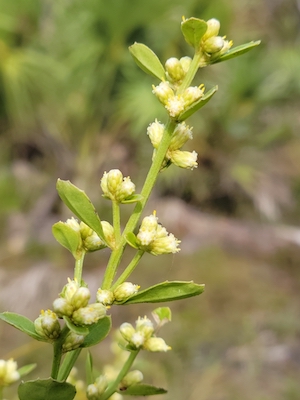
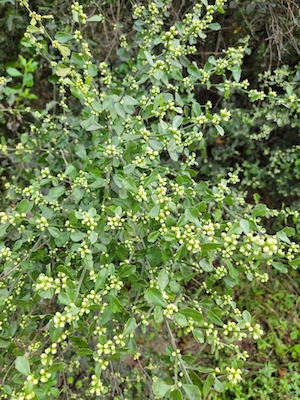
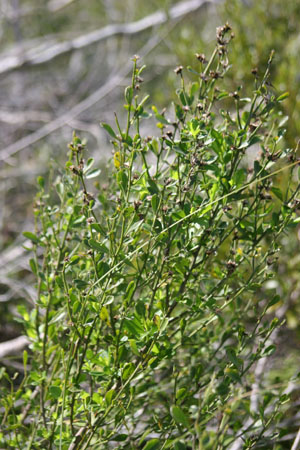
Medium erect shrub with a narrow crown. Leaves 1-2 inches long. |
| Height: |
| |
Typically 6-8 feet in height. Taller than broad. |
| Growth Rate: |
| |
Fast to moderate. |
| Range: |
| |
Southeastern United States south to the Monroe County Keys; Bermuda, Bahamas and Cuba. Common throughout most of its range in South Florida. In the Monroe County Keys, known only from Key Largo where collected once in 2003. |
| Habitats: |
| |
Moist to wet forest edges and thickets; also disturbed sites. |
| Soils: |
| |
Moist to seasonally wet, well-drained to poorly-drained, sandy, limestone, or organic soils, with or without humusy top layer. |
| Nutritional Requirements: |
| |
Moderate; can grow in nutrient poor soils, but needs some organic content to thrive. |
| Salt Water Tolerance: |
| |
Moderate; tolerates brackish water or occasional inundation by salt water. |
| Salt Wind Tolerance: |
| |
High; can tolerate moderate amounts of salt wind without significant injury. |
| Drought Tolerance: |
| |
Moderate; generally requires moist soils, but tolerant of short periods of drought once established. |
| Light Requirements: |
| |
Full sun. |
| Flower Color: |
| |
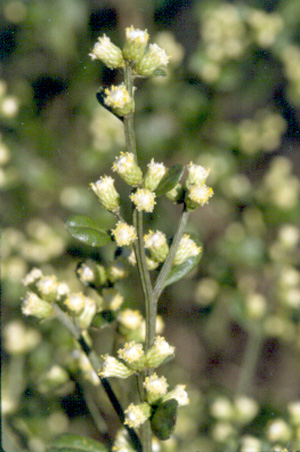
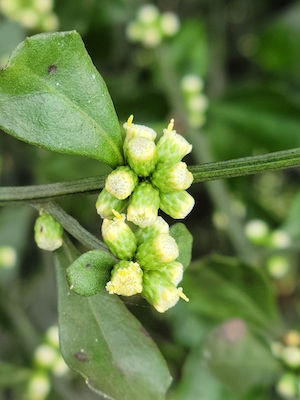
White. |
| Flower Characteristics: |
| |
Semi-showy heads. Fragrant. Dioecious, with male and female flowers on different plants. |
| Flowering Season: |
| |
Fall. |
| Fruit: |
| |
Inconspicuous achene, but fruiting masses can be semi-showy. |
| Wildlife and Ecology: |
| |
Provides some food and significant cover for wildlife. May be a nectar plant for monarch (Danaus plexippus) and other butterflies. Nectar from the male flowers attacts pollinators and the seeds are dispersed by wind. |
| Horticultural Notes: |
| |
Can be grown from seed. Cover with just enough soil to keep the seeds from blowing away. Also can be propogated from soft or hard wood cuttings. |
| Comments: |
| |
Spreads readily from seed in the garden and can become weedy. The pollen is an allergen. |