Natives For Your Neighborhood is a labor of love and commitment. If you use this website, help us maintain and grow it with your tax-deductible donation.
Soils: Wet to moist, well-drained to poorly-drained sandy or organic soils, with humusy top layer.
Nutritional Requirements: Moderate; can grow in nutrient poor soils, but needs some organic content to thrive.
Salt Water Tolerance: Low; does not tolerate flooding by salt or brackish water.
Salt Wind Tolerance: Low; salt wind may burn the leaves.
Drought Tolerance: Low; requires moist to wet soils and is intolerant of long periods of drought.
Light Requirements: Full sun.
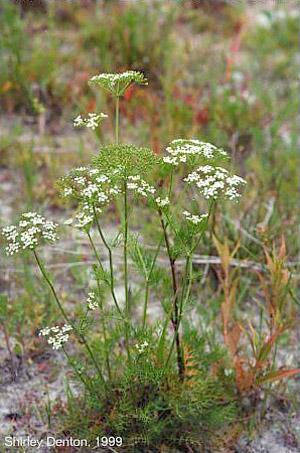
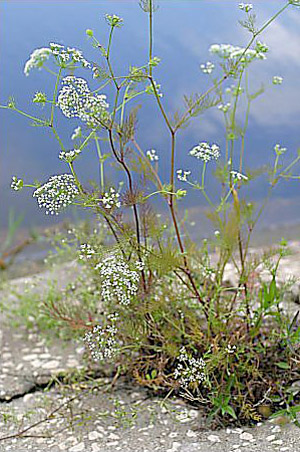
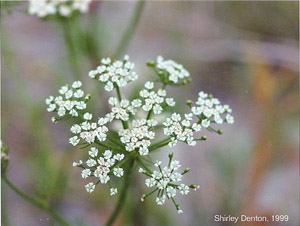
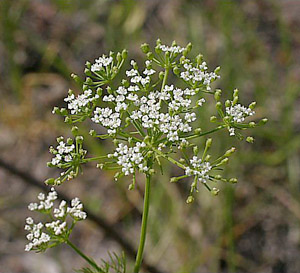
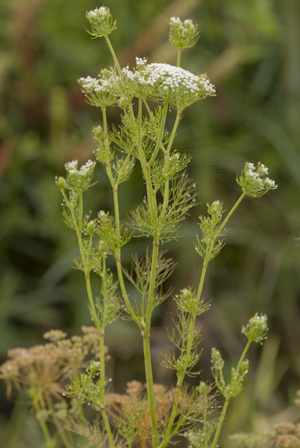
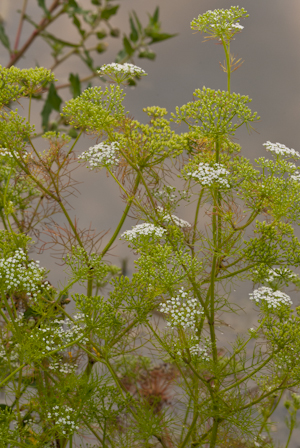
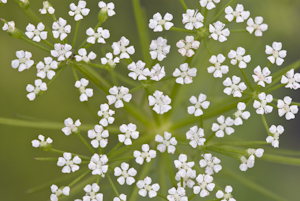
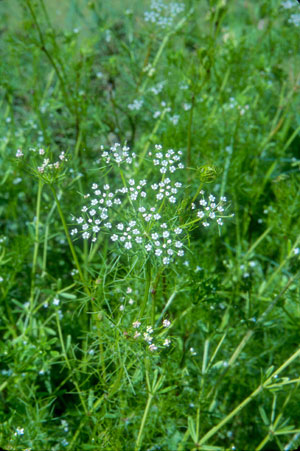
Flower Color: White.
Flower Characteristics: Semi-showy.
Flowering Season: All year.
Fruit: A pair of inconspicuous carpels pendent from a supporting axis.
Wildlife and Ecology: Larval host plant for black swallowtail (Papilio polyxenes) butterflies.
Comments: This self seeds and can be somewhat weedy. See also the Florida Wildflower Foundation's Flower Friday page. See a 2019 post on the Treasure Coast Natives blog on dominant mudflat species including mock bishopsweed.










 Map of select IRC data from peninsular Florida.
 Map of ZIP codes with habitat recommendations from the Monroe County Keys north to Martin and Charlotte counties.