Natives For Your Neighborhood is a labor of love and commitment. If you use this website, help us maintain and grow it with your tax-deductible donation.
General Landscape Uses:
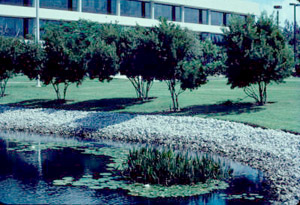
A versatile shrub or small tree in formal and informal landscapes, but it needs moist to wet soils to thrive. It can be used as an accent or specimen shrub, as a trimmed or informal hedge, or in mixed buffer plantings. Learn more about gardening with wax myrtle for birds and other wildlife in Attracting Birds to South Florida Gardens.
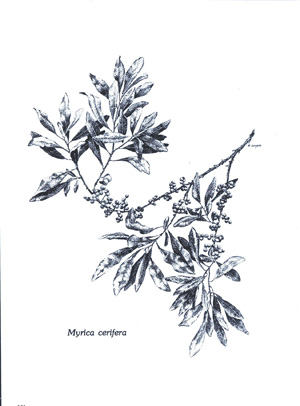
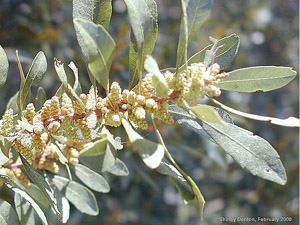
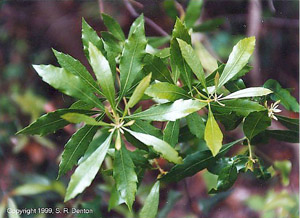
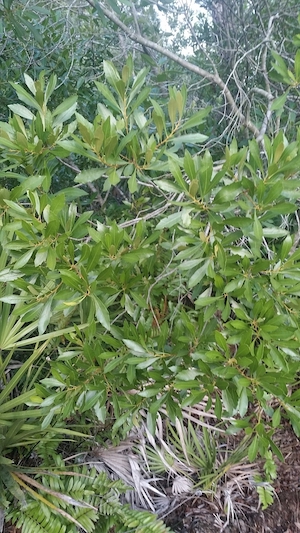
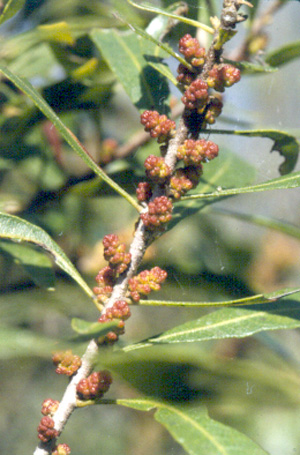
Description: Medium to large shrub or small tree with a narrow crown from crooked trunks. Bark pale gray. Leaves wax-covered, semi-deciduous, 1-4 inches long, aromatic when crushed.
Dimensions: Typically 8-15 feet in height in South Florida, but extremely variable; to 36 feet in Florida. Sometimes as broad as tall, especially when smaller.
Growth Rate: Moderate.
Range:
Eastern and southeastern United States west to Texas and Oklahoma and south to the Monroe County Keys; Bermuda, West Indies, Mexico and Central America. In the Monroe County Keys, disjunct from the Miami-Dade County mainland and North Key Largo to the lower Keys. For a digitized image of Elbert Little's Florida range map, visit the Exploring Florida website.
Soils: Moist to wet, well-drained to poorly-drained sandy, limestone, or organic soils, usually with humusy top layer.
Nutritional Requirements: Moderate; can grow in nutrient poor soils, but needs some organic content to thrive.
Salt Water Tolerance: Low; does not tolerate long-term flooding by salt or brackish water.
Salt Wind Tolerance: Moderate; grows near salt water, but is protected from direct salt spray by other vegetation.
Drought Tolerance: Moderate; generally requires moist soils, but tolerant of short periods of drought once established.
Light Requirements: Full sun to light shade.
Flower Color: White.
Flower Characteristics: Inconspicuous catkins.
Flowering Season: All year; peak winter-spring.
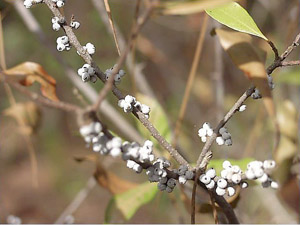
Fruit: Small, waxy bluish drupe.
Wildlife and Ecology: Provides significant food and cover for wildlife. Larval host plant for red-banded hairstreak (Calycopis cecrops) butterflies and io (Automeris io) moths. Yellow-rumped warblers, tree swallows and a wide variety of other birds feed on the fruit, which are particularly important to wintering birds just prior to their return migration.
Horticultural Notes: Can be grown from seed; usually cold stratified. Also can be grown from cuttings with difficulty.










 Map of select IRC data from peninsular Florida.
 Map of suggested ZIP codes from South Florida north to southern Brevard, Osceola, Polk, and Pasco counties.