Natives For Your Neighborhood is a labor of love and commitment. If you use this website, help us maintain and grow it with your tax-deductible donation.
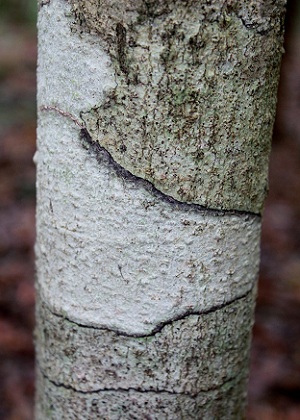
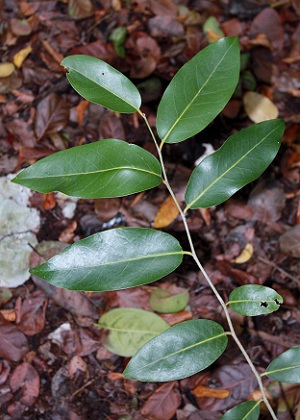
Copyright by: George D. Gann in habitat, Everglades National Park, Key Largo, Florida, 2013
General Landscape Uses:
Specimen or accent tree in the Florida Keys.
Ecological Restoration Notes: An occasional element of rockland hammocks.
Availability:
Grown by one or two native plant nurseries in South Florida.
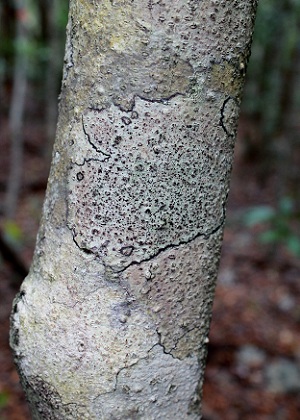
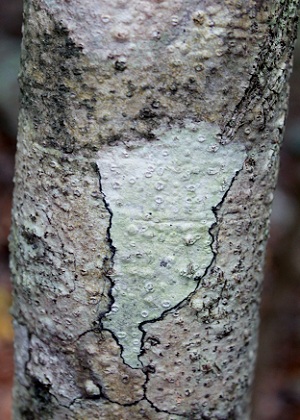
Description: Medium tree with and erect trunk. Bark smooth, white, usually covered with patches of gray, brown or yellow patches. Leaves stiff, dark green above, 3-5 inches long.
Dimensions: Typically 20-30 feet in height; to 46 feet in South Florida. Taller than broad.
Growth Rate: Slow.
Range:
Monroe County Keys and Miami-Dade County; Bahamas. In Miami-Dade County, not known from the mainland; known only from the Florida Keys in and around Elliott Key in Biscayne National Park. For a digitized image of Elbert Little's Florida range map, visit the Exploring Florida website.
Soils: Moist, well-drained limestone soils, with humusy top layer.
Nutritional Requirements: Moderate; can grow in nutrient poor soils, but needs some organic content to thrive.
Salt Water Tolerance: Low; does not tolerate long-term flooding by salt or brackish water.
Salt Wind Tolerance: Low; salt wind may burn the leaves.
Drought Tolerance: Moderate; generally requires moist soils, but tolerant of short periods of drought once established.
Light Requirements: Light shade.
Flower Color: Yellowish-white.
Flower Characteristics: Inconspicuous. Dioecious, with male and female flowers on separate plants.
Flowering Season: All year; peak in summer.
Fruit: Ivory-white ovoid drupe.
Wildlife and Ecology:Larval host plant for Florida white (Appias drusilla) butterflies.
Horticultural Notes: Can be grown from seed.
References: Hammer 2004
Comments: The seedling leaves resemble those of holly (Ilex). It is listed as endangered by the state of Florida. See also Florida Natural Areas Inventory's Field Guide to the Rare Plants of Florida page (Chafin 2000).
Copyright by: George D. Gann in habitat, Everglades National Park, Key Largo, Florida, 2013
Copyright by: George D. Gann in habitat, Everglades National Park, Key Largo, Florida, 2013
Copyright by: George D. Gann in habitat, Everglades National Park, Key Largo, Florida, 2013
Copyright by: George D. Gann in habitat, Everglades National Park, Key Largo, Florida, 2013










 Map of select IRC data from peninsular Florida.
 Map of suggested ZIP codes from South Florida north to southern Brevard, Osceola, Polk, and Pasco counties.