General Landscape Uses:
Primarily recommended for natural landscapes and habitat restorations. Also an accent epiphyte. Identified by Fair Child Tropical Botanic Garden as a native that does especially well in shade in this
brochure.
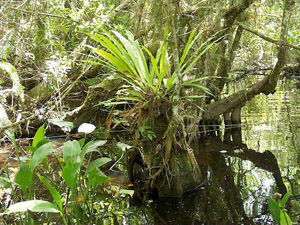
Ecological Restoration Notes: One of the most abundant epiphytic ferns in a wide variety of forests.
Availability:
Grown by enthusiasts.
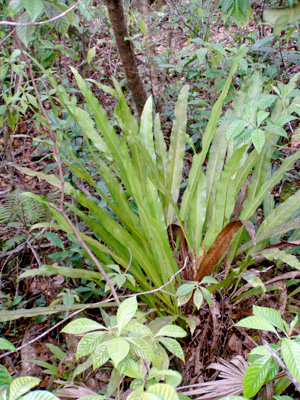
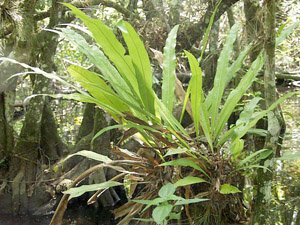
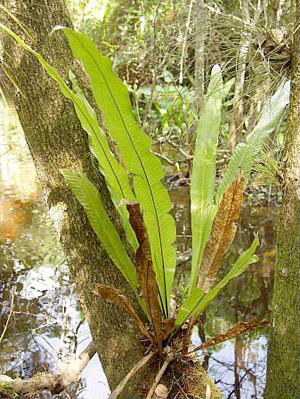
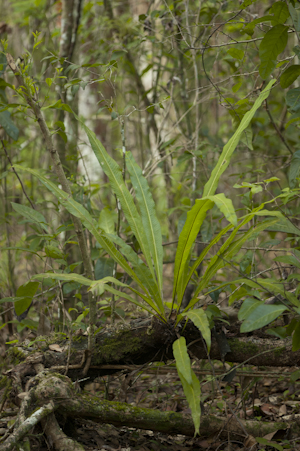
Description: Epiphytic or terrestrial fern with numerous erect fronds rising in a tuft from the rootstock. Leaves long and narrow.
Dimensions: Typically 2-3 feet in height. Mostly taller than broad.
Growth Rate: Moderate.
Range:
Monroe County Keys north to Volusia, Lake and Citrus counties; West Indies, Mexico, Central America and South America. In the Monroe County Keys, apparently native only to Key Largo.
 Map of select IRC data from peninsular Florida.
 Map of suggested ZIP codes from South Florida north to southern Brevard, Osceola, Polk, and Pasco counties.
Map of ZIP codes with habitat recommendations from the Monroe County Keys north to Martin and Charlotte counties.
Habitats:
Map of suggested ZIP codes from South Florida north to southern Brevard, Osceola, Polk, and Pasco counties.
Map of ZIP codes with habitat recommendations from the Monroe County Keys north to Martin and Charlotte counties.
Habitats: A wide variety of swamps and humid forests.
Soils: Epiphytic, growing on the trunks and branches of trees and shrubs, or terrestrial in moist, well-drained humusy leaf litter; also on rotting logs and on limestone.
Nutritional Requirements: Moderate; can grow on nutrient poor substrate, but needs some nutrient inputs to thrive.
Salt Water Tolerance: Low; does not tolerate long-term flooding by salt or brackish water.
Salt Wind Tolerance: Low; salt wind may burn the leaves.
Drought Tolerance: Low; requires moist substrate and high humidity and is intolerant of long periods of drought.
Light Requirements: Light shade.
Flower Color: N/A.
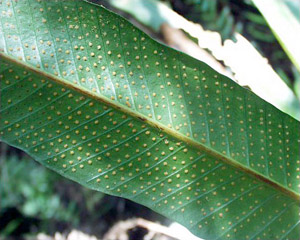
Flower Characteristics: There are no flowers; the plants reproduce by spores.
Flowering Season: All year.
Fruit: Inconspicuous spores.
Horticultural Notes: Can be grown from spores. Small plants can be transplanted.
References: A Gardener's Guide to Florida's Native Plants